
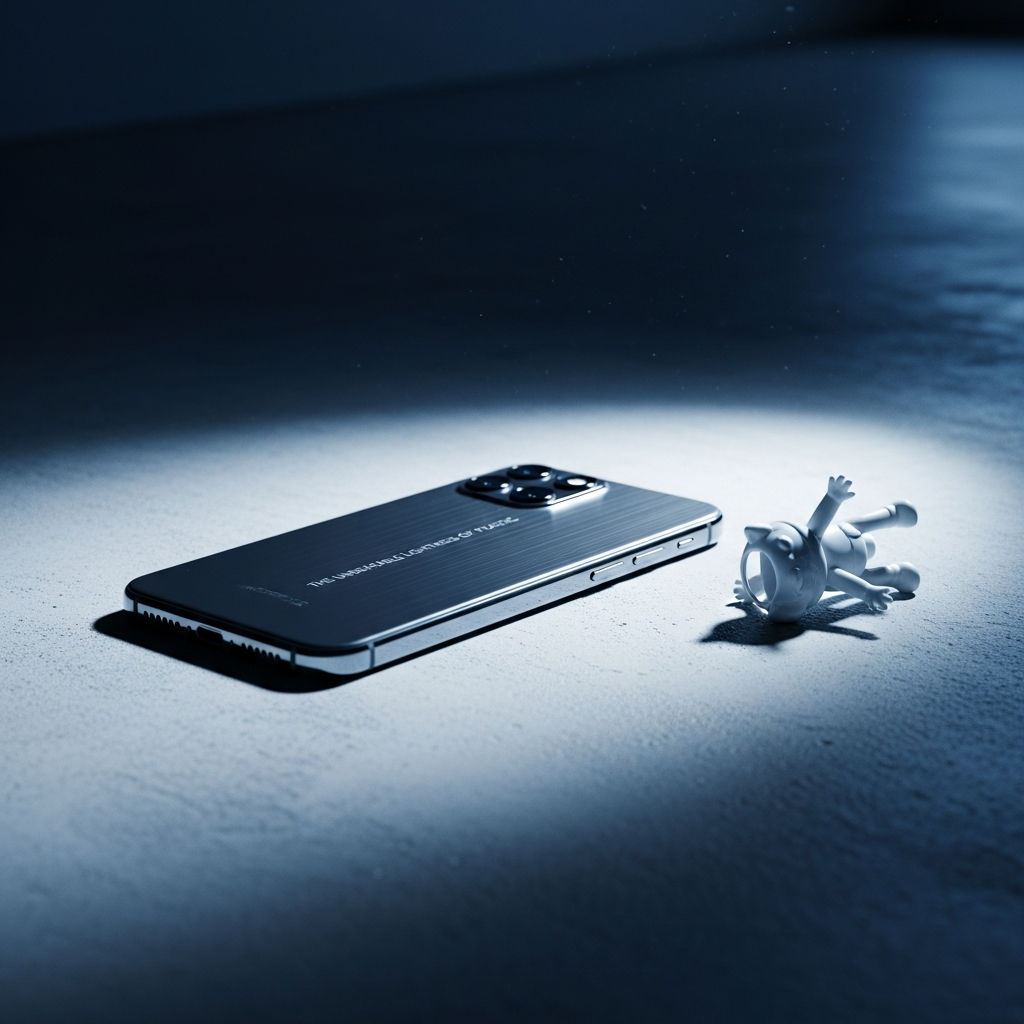
The Unbearable Lightness of Plastic: Why Premium Gadgets Should Feel Heavy
In the world of modern technology, manufacturers are constantly locked in a race to make things thinner, sleeker, and more portable. We are told that “lightweight” is a synonym for “advanced.” Yet, there is a nagging sensation that occurs when you pick up a flagship smartphone or a high-end pair of headphones and find they weigh next to nothing. Instead of feeling impressed by the engineering, you feel cheated. This is the “unbearable lightness” of plastic—a phenomenon where the lack of physical mass creates a vacuum of perceived value.
For decades, there has been a profound psychological link between weight and quality. While material science has evolved to the point where light plastics can be as strong as heavy metals, the human brain hasn’t caught up. We are hardwired to believe that “heavy is reliable.” In this article, we will explore the psychology of haptic perception, the engineering benefits of dense materials, and why the tech industry must embrace heft to define true luxury.
The Psychology of Weight: The Weight-Value Heuristic
Why do we equate weight with worth? Psychologists call this the “weight-value heuristic.” From an evolutionary perspective, our ancestors judged the density and quality of tools, stones, and wood by their mass. A dense, heavy stone made a better hammer; a sturdy, heavy branch made a better club. In a modern context, this translates to our gadgets.
Sensory Marketing and Consumer Trust
When a consumer picks up a product, the first sensory input they receive—before they even turn the screen on—is its weight and temperature. If a device is cold to the touch (metal) and has a significant “thud” when placed on a table, the brain registers it as high-quality. If it is warm and light (plastic), the brain categorizes it as a toy or a disposable commodity.
- Perceived Durability: Heavier items are perceived as more capable of withstanding drops and wear.
- Component Density: A heavy device suggests it is “packed” with technology, whereas a light device feels hollow or empty.
- Emotional Connection: Weight provides a sense of presence. A heavy watch on the wrist or a heavy pen in the hand provides a constant tactile reminder of its existence and value.
The Problem with Plastic: More Than Just “Cheap”
Plastic is a miracle of the 20th century, but in the 21st-century gadget market, it has become a liability for premium brands. The “unbearable lightness” of plastic isn’t just about weight; it’s about the sensory experience. Plastic vibrates differently, sounds differently, and ages poorly compared to premium materials like aluminum, stainless steel, or titanium.
The “Hollow” Effect
One of the biggest detractors from the premium experience is the “hollow” sound. When you tap on a plastic chassis, it resonates with a high-pitched, empty sound. This suggests that the internal components are rattling around or that there is significant dead space. Conversely, a device milled from a solid block of aluminum absorbs that vibration, resulting in a deadened, solid “clack” that screams precision engineering.
Structural Integrity and Torsion
Plastic is flexible. While flexibility can prevent snapping, it also leads to “creaking.” When you grip a plastic laptop or phone, you can often feel the chassis flex slightly. This torsion creates a feeling of instability. Premium gadgets should feel like a single, monolithic object. Heavy materials provide the structural rigidity necessary to eliminate that “cheap” flex.
Engineering the Heft: The Functional Benefits of Heavy Materials
Beyond the psychological allure, there are practical, engineering-driven reasons why premium gadgets should be made from denser, heavier materials. Mass is often a byproduct of better performance and longevity.
1. Superior Heat Dissipation
As processors become more powerful, they generate more heat. Plastic is an insulator; it traps heat inside the device, leading to thermal throttling and reduced performance. Metals like aluminum and copper are excellent thermal conductors. By using a heavy metal chassis, the entire body of the gadget acts as a heatsink, wicking heat away from the CPU and allowing the device to run faster for longer.
2. Vibration Dampening in Audio
In the world of high-end audio, weight is king. High-fidelity speakers and turntables are notoriously heavy for a reason: mass dampens unwanted vibrations. A lightweight plastic speaker will rattle and distort at high volumes. A heavy, dense enclosure ensures that the only thing moving is the driver, resulting in cleaner, more accurate sound.
3. Stability and Ergonomics
For desktop peripherals—like mechanical keyboards or professional microphones—weight is essential for stability. A lightweight keyboard will slide across your desk during an intense typing session. A “premium” keyboard often features an internal steel or brass plate, ensuring it stays exactly where you put it. The weight provides a literal “anchor” to the user’s workflow.
Case Studies: Brands That Mastered the “Premium Feel”
Several companies have built their entire brand identity around the tactile sensation of heft and material quality. These brands understand that the “unbearable lightness” of plastic is the enemy of luxury.
Apple: The Pioneers of Aluminum
Apple’s transition from the plastic “Polycarbonate” MacBooks and iPhones to the “Unibody” aluminum design was a turning point for the industry. By milling laptops from a single block of metal, Apple created a product that felt significantly heavier and more substantial than its competitors. This move single-handedly redefined what a “pro” laptop should feel like.
Leica: The Weight of Heritage
Leica cameras are famous for being incredibly heavy for their size. Made of brass and magnesium alloy, a Leica M-series camera feels like a precision medical instrument. This weight isn’t accidental; it’s a design choice that signals durability and artisanal craftsmanship. To a photographer, that weight translates to stability and confidence.
The Mechanical Watch Industry
Perhaps no industry understands the value of weight better than horology. A luxury Swiss watch is often significantly heavier than a quartz equivalent. The “heft” of the 316L stainless steel or 18k gold case serves as a physical manifestation of the complex mechanical movement inside. A light mechanical watch feels “off,” as if the soul of the machine is missing.
Sustainability and the Future of Premium Materials
As we move toward a more eco-conscious world, the argument for heavy, premium materials becomes even stronger. Plastic is a petroleum product that often ends up in landfills. It degrades, scratches, and discolors over time, encouraging a “disposable” culture.
Metals, on the other hand, are infinitely recyclable. A titanium phone frame or a stainless steel watch case can be melted down and repurposed with minimal loss of quality. Furthermore, heavy gadgets tend to be more repairable. Because the chassis is rigid and durable, it can be opened and closed multiple times without the screw holes stripping or the clips snapping—common issues with plastic assemblies.
Conclusion: The Case for Substantial Tech
Innovation should not always mean “lighter.” While portability is important for certain devices, the industry has reached a point where lightness is being used as a mask for cost-cutting. To the discerning consumer, a premium gadget is an investment, and that investment should have a physical presence.
The “unbearable lightness of plastic” reminds us of the ephemeral and the disposable. But the heft of metal, the density of glass, and the cold touch of a well-engineered chassis remind us of permanence and quality. If we want our technology to feel like more than just a tool—if we want it to feel like a masterpiece—it needs to have the weight to back it up. In the future of tech, luxury won’t be measured by how thin a device is, but by the satisfying, heavy “thud” it makes when you set it down on your desk.