
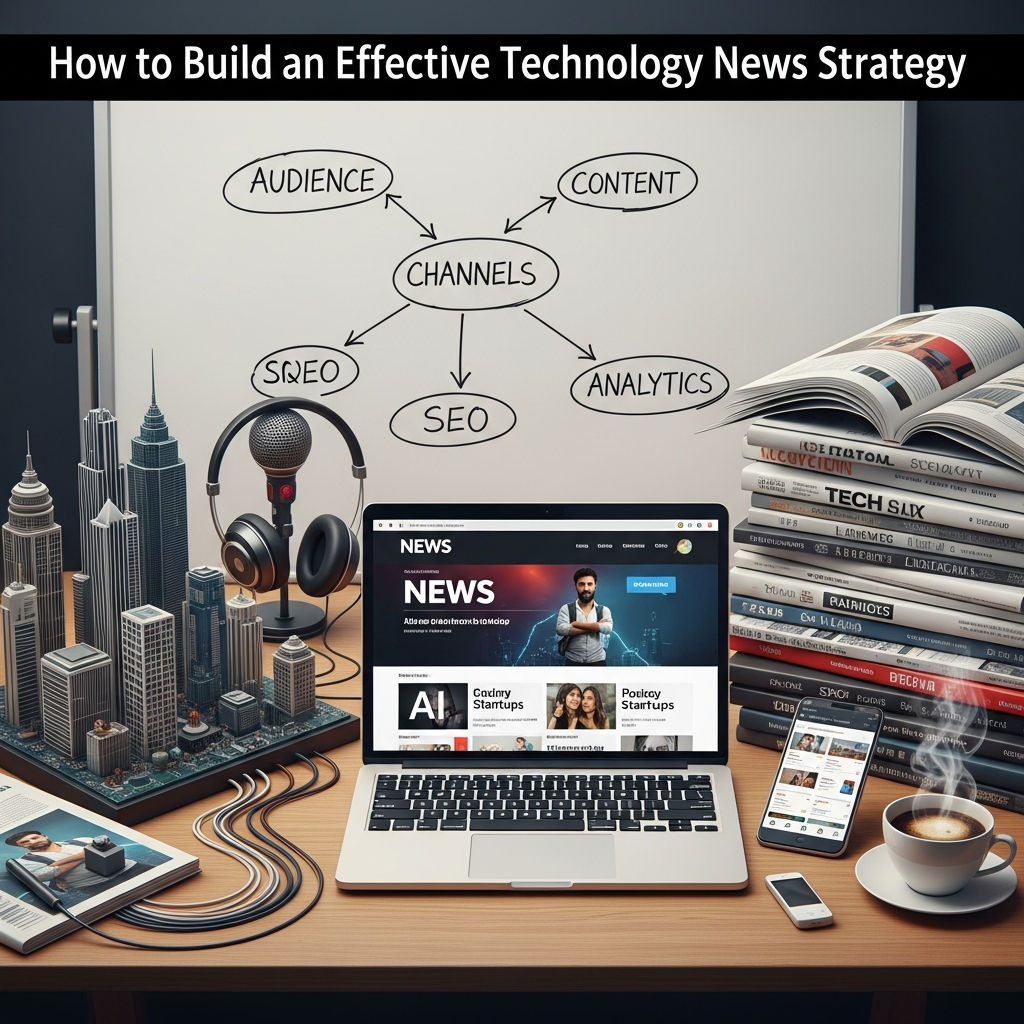
How to Build an Effective Technology News Strategy
In an era where digital transformation dictates the pace of global business, staying informed isn’t just a hobby—it’s a competitive necessity. However, the sheer volume of information generated every second can lead to “infobesity,” where the noise outweighs the signal. Building an effective technology news strategy allows individuals and organizations to filter the chaos, identify emerging trends, and make data-driven decisions that foster innovation.
Whether you are a CTO looking to future-proof your infrastructure, a marketer tracking consumer shifts, or an entrepreneur seeking the next big gap in the market, a structured approach to tech news is essential. This guide explores the foundational steps to building a strategy that turns information into a strategic asset.
Why a Formal News Strategy Matters
Many professionals rely on “passive consumption”—scrolling through social media or glancing at headlines during a coffee break. While this provides a surface-level understanding, it rarely leads to actionable insights. A formal technology news strategy provides several key benefits:
- Competitive Advantage: Being the first to know about a competitor’s pivot or a new software release gives you the “first-mover” advantage.
- Risk Mitigation: Early warnings about cybersecurity threats or regulatory changes in AI and data privacy can save millions in potential fines and damages.
- Innovation Fuel: Exposure to cross-industry tech applications can spark creative solutions for your own business challenges.
- Efficiency: A strategy reduces time wasted on redundant or low-quality content, allowing you to focus on high-impact information.
Step 1: Define Your Core Objectives
Before diving into sources, you must define what you are looking for. A generic interest in “tech” is too broad. To build an effective strategy, categorize your interests into three main buckets:
Primary Industry Trends
Focus on technologies that directly impact your current business model. If you are in finance, your strategy should prioritize Fintech, blockchain, and regulatory tech (RegTech). If you are in manufacturing, Industry 4.0 and IoT should be your primary focus.
Disruptive Technologies
These are technologies that might not affect you today but could redefine your industry in three to five years. Examples include Generative AI, Quantum Computing, and Synthetic Biology. Tracking these allows for long-term strategic planning.
Operational Technology
This includes tools that improve how you work, regardless of your industry. Updates on project management software, CRM enhancements, and remote work security fall into this category.
Step 2: Curate High-Quality Information Sources
Not all tech news is created equal. To avoid misinformation and “hype cycles,” you need a diversified portfolio of sources. A healthy news diet should include a mix of the following:
- Major Tech Outlets: Sites like TechCrunch, The Verge, and Wired are excellent for broad industry overviews and breaking news.
- Niche Newsletters: Newsletters often provide better curation than websites. Look for industry-specific newsletters like TLDR for general tech, Ben’s Bites for AI, or Stratechery for deep-dive business analysis.
- Primary Research and Academic Journals: For deep technical insights, monitor platforms like ArXiv for AI research or reports from firms like Gartner and Forrester.
- Social Media & Community Hubs: Platforms like Hacker News, Reddit (r/technology), and specialized X (formerly Twitter) lists provide real-time sentiment and developer perspectives that mainstream media might miss.
Step 3: Leverage Automation and AI Tools
The secret to an effective technology news strategy is automation. You shouldn’t have to go looking for the news; the news should come to you in a pre-filtered format. Here are the tools to make that happen:
RSS Feed Aggregators
Tools like Feedly or Inoreader allow you to pull content from hundreds of websites into a single interface. You can use AI-powered filters within these tools to highlight specific keywords and hide irrelevant “fluff.”
Custom Alerts
Set up Google Alerts or Talkwalker for specific competitors, product names, or emerging terms. This ensures you never miss a mention of a topic critical to your strategy.

AI Summarization
With the rise of Large Language Models (LLMs), you can now use tools to summarize long whitepapers or hour-long tech podcasts. Use AI to provide “Executive Summaries” of complex technical documents to determine if they warrant a deeper read.
Step 4: Establish a Review Cadence
Information is only valuable if it is processed. An effective strategy requires a dedicated schedule. Consider the following cadence:
- Daily (15-30 mins): Scan headlines and “breaking news” to ensure immediate threats or opportunities aren’t missed. Focus on your RSS feed and primary newsletters.
- Weekly (1 hour): Dive deeper into long-form articles, whitepapers, or podcasts. This is the time for “reflective reading” rather than just scanning.
- Monthly (Strategic Review): Summarize the month’s biggest shifts. How do these developments impact your quarterly goals? Share these insights with your team or stakeholders.
Step 5: Bridge the Gap Between Consumption and Action
A technology news strategy fails if the information remains trapped in your head or your bookmarks folder. You must create a pipeline for “Information to Action.”
The “So What?” Analysis
For every major piece of news, ask: “So what?” If OpenAI releases a new model, what does that mean for your company’s customer service bot? If a new data privacy law passes in Europe, how does that affect your US-based marketing database? Always translate the news into a business implication.
Internal Knowledge Sharing
Create a dedicated Slack or Microsoft Teams channel (e.g., #tech-trends) where team members can share relevant articles. Encourage people to include a one-sentence summary of why the link is relevant to the company. This democratizes the news strategy and fosters a culture of continuous learning.
Centralized Knowledge Base
Use tools like Notion, Obsidian, or Trello to archive the most important insights. Categorize them by topic so that when you eventually start a project on, for example, “Cloud Migration,” you already have a curated library of recent trends and case studies to reference.
Overcoming Information Overload
The biggest challenge to a tech news strategy is the feeling of being overwhelmed. To combat this, remember that it is okay to miss things. You don’t need to read every article. If a story is truly important, it will reappear across multiple sources.
Practice “Just-In-Time” learning versus “Just-In-Case” learning. While you should keep a pulse on the industry (just-in-case), save the deep technical dives for when they are relevant to a project you are actually working on (just-in-time).
Conclusion
In the digital age, your ability to process and act on information is a primary driver of success. By defining your focus, automating your discovery process, and building a culture of sharing, you transform technology news from a source of stress into a powerful strategic engine. Building an effective technology news strategy isn’t about reading more; it’s about reading smarter and ensuring that every headline you consume moves you or your organization one step closer to your goals.